
Aqaba & the Red Sea: Jordan's beach and diving guide
People come to Jordan for the desert and leave surprised that it has a coast at all. It does — one city, one gulf, and some of the clearest warm water in the region. Aqaba sits at the very top of the Red Sea, where the reef begins a few strokes from the sand and a sunken plane rests on the seabed within sight of the beach hotels. It is where Jordanians go to swim in January, where divers come for coral and wrecks, and where a desert trip finally meets the sea. Give it two or three days at the end of your journey and you'll understand why locals treat it as the country's reward.
Heads up: some links on this page are affiliate links. If you book through one we may earn a small commission at no extra cost to you — it keeps these guides free. It never changes what we recommend.
Why go to Aqaba
Aqaba is Jordan's only coastal city and its single window on the sea. It sits at the northern tip of the Red Sea, on the Gulf of Aqaba, a narrow arm of warm water hemmed in by desert mountains that turn pink at sunset. The city is about four hours south of Amman by the Desert Highway, or a short domestic flight if you'd rather skip the road. That distance matters: Aqaba is far enough from the capital to feel like a proper change of pace, and close enough to the southern sights to fold neatly into the end of a trip.
It also feels different the moment you arrive. Aqaba is a Special Economic Zone, which in practice means a relaxed, duty-free atmosphere, lower prices on some goods, and a town built around the waterfront rather than the traffic. Palm-lined corniches, seafood grills, dive shops and hotel pools give it an easygoing, holiday temperament that the rest of Jordan — magnificent but hard-working — doesn't quite share.
Most of all, Aqaba is warm. When Amman is grey and the desert nights turn cold, the coast stays mild and sunny, and the sea stays swimmable. That single fact — a beach you can actually use in winter — is why so many Jordanians treat Aqaba as their escape hatch, and why it belongs on a first-time itinerary as more than an afterthought.
Diving & snorkelling the Red Sea
The Gulf of Aqaba is the real headline. The water is warm and clear essentially year-round, and the reefs are unusually easy to reach: fringing coral grows close to shore, so you can wade or swim out and be among fish within minutes, no boat required. That accessibility, plus consistent visibility, is what makes Aqaba a favourite for beginners learning to dive and a comfortable place for snorkellers who simply want to float over a living reef.
Then there are the wrecks, which is where Aqaba becomes special. The Cedar Pride is the classic — a cargo ship deliberately sunk decades ago to form an artificial reef, now furred with coral and easy to explore on a single dive. Nearby lies a C-130 Hercules, a genuine military transport aircraft sunk on purpose to create a new dive site; swimming up to an intact plane on the seabed is the kind of thing divers remember for years. Aqaba has leaned into this idea with an underwater military museum, a line of tanks and armoured vehicles sunk in formation to seed fresh coral and give divers a surreal, half-eerie route to follow along the sand.
For coral over hardware, the Japanese Garden reef is one of the best-loved sites, a shallow, colourful stretch that suits snorkellers and divers alike. All of it sits within a protected marine park, and Aqaba is a well-run destination: there are many PADI dive centres along the coast, equipment rental is straightforward, and instructors are used to first-timers. Whether you're getting certified, doing a discovery dive, or just borrowing a mask and fins from the beach, the reef is closer and kinder than almost anywhere else you could start.
If you don't dive. You don't need a tank to enjoy the reef. Snorkelling straight off a public or resort beach puts you over coral in waist-deep water, and it's the cheapest, easiest way to see why people rave about this gulf.
Above the water: beaches, boats and the marina
Aqaba works just as well for people who'd rather stay dry — or at least stay near the surface. The coast is a mix of public beaches in and around town and a strip of resort beaches along the South Beach hotel corridor, where the big properties keep their own stretches of sand, loungers and pools. Public beaches are lively and free, good for people-watching and a swim; the resort strip is calmer and more manicured, better if you want a full beach day with facilities.
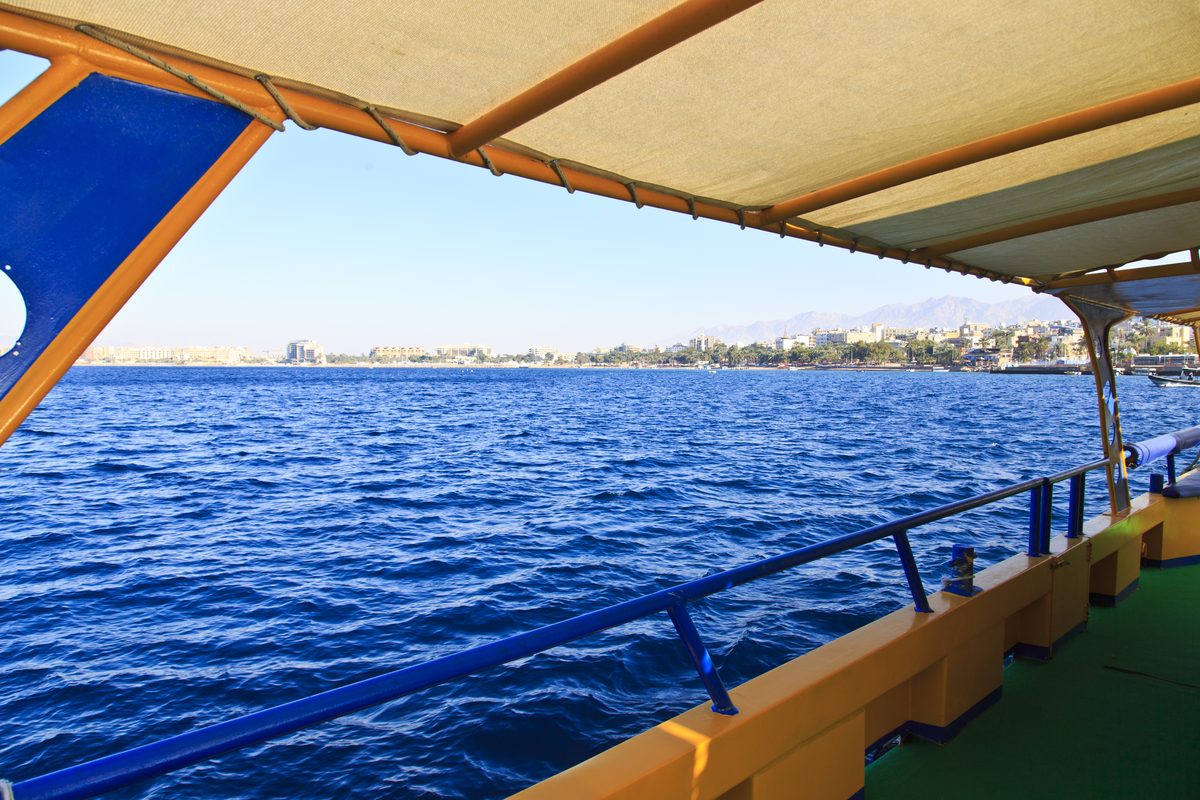
For seeing the reef without getting wet, glass-bottom boat trips are an Aqaba institution — an hour or two drifting over coral and the shallower wrecks, with the fish clearly visible below. They're gentle, family-friendly, and a good option when there are children or non-swimmers in the group. Bigger boat excursions run further along the gulf for snorkelling stops and a swim in deeper blue.
The newest face of the city is Ayla, a large lagoon and marina development on the edge of town with man-made waterways, waterfront promenades, restaurants and a marina full of boats. It has given Aqaba a modern, walkable waterfront to complement the older corniche, and it's a pleasant place to eat or stroll in the evening. And whatever else you do, eat the seafood: fresh fish grilled simply by the water is one of the quiet pleasures of the coast, and a reminder that this really is a fishing town at heart.
Aqaba as a base: Wadi Rum and warm winters
Aqaba's location is half its value. It sits only about an hour from Wadi Rum, so the desert and the sea are close enough to do back to back — sleep under the stars in a Bedouin camp one night, and cool off in the Red Sea the next afternoon. That pairing is one of the best short loops in Jordan, and it's the main reason travellers slot Aqaba onto the itinerary rather than treating it as a detour.
It also anchors the classic southern route. Petra is roughly two hours north by road, which makes a Petra → Wadi Rum → Aqaba sequence a natural way to travel: the ancient city, then the desert, then the sea to unwind before flying home. For deciding how to split your time between the two great southern landscapes, see our Petra vs Wadi Rum guide, and for planning the desert nights, our Wadi Rum camping guide.
The other half of Aqaba's value is the weather. This is Jordan's warm-winter refuge — when Amman is cold and the desert bites after dark, the coast stays mild, and the sea is one of the few places in the country you can comfortably swim off-season. If your trip lands between November and March, Aqaba is where you thaw out.
When to go & practical tips
When to go. Autumn to spring — roughly October through April — is the comfortable stretch: warm days, gentle evenings, and a sea that still invites you in. High summer is genuinely hot on land, so plan water time for early morning and late afternoon and hide from the midday sun; the sea itself stays swimmable throughout. Winter is the underrated season, mild and sunny while much of Jordan is cold. See our best time to visit guide for the wider picture.
Getting there. Drive the Desert Highway from Amman in about four hours, or take the short domestic flight to save the road. Many travellers arrive overland from Wadi Rum or Petra as part of a southern loop.
In the water. Choose a dive centre that's clearly PADI-affiliated and unhurried with beginners; reputable operators are the norm here. The reefs are protected, so don't touch or stand on coral, and follow the marine-park guidance — the health of the gulf is exactly what you came to see.
What to pack. Reef-safe sunscreen, a hat and a rash guard for the strong sun, water shoes for rocky entries, and your own mask and snorkel if you have them. The sun reflecting off the water is fierce even in cooler months.
Respect and pace. Aqaba is relaxed, but it's still Jordan: away from resort beaches, dressing modestly is appreciated. Beyond that, the town rewards a slow pace — a morning on the reef, a lazy afternoon, grilled fish at sunset, and the mountains going pink across the gulf.
Frequently asked questions
Is Aqaba worth visiting?
Yes, especially if you want to swim, dive or simply warm up. Aqaba is Jordan's only coastal city and the country's one stretch of the Red Sea, with clear water, coral reefs a short swim from shore, and a relaxed duty-free feel as a Special Economic Zone. It is also the natural warm-weather escape when Amman is cold, and it sits about an hour from Wadi Rum, so most travellers pair the two.
Can you dive and snorkel in Aqaba year-round?
Yes. The Gulf of Aqaba stays warm and clear essentially all year, so diving and snorkelling are possible in every season. Water temperatures are most comfortable from spring through autumn, and even winter stays swimmable with a wetsuit while the air is mild. Aqaba is a well-run dive destination with many PADI centres and a marine park that protects the reefs.
How far is Aqaba from Amman, Petra and Wadi Rum?
Aqaba is about four hours south of Amman on the Desert Highway, or a short domestic flight to King Hussein International Airport. Wadi Rum is only about an hour away, which is why the desert and the sea are so easily combined. Petra sits between the two, roughly two hours by road, so a Petra–Wadi Rum–Aqaba loop is a common way to finish a Jordan trip by the water.
What can you see diving in Aqaba?
Aqaba's underwater draw is a mix of living reef and deliberately sunk attractions. Fringing coral reefs sit close to shore, including the well-known Japanese Garden. The famous wrecks include the Cedar Pride, a cargo ship sunk as an artificial reef, and a C-130 Hercules military aircraft. There is also an underwater military museum, where tanks and armoured vehicles were sunk in formation to grow new coral and give divers something unusual to explore.
When is the best time to visit Aqaba?
Autumn to spring is the most comfortable window, roughly October to April, when the days are warm rather than fierce and the sea is still inviting. High summer is very hot on land, though the water stays swimmable and the resorts run air-conditioned. Winter is Aqaba's quiet advantage: while Amman can be cold and grey, the coast stays mild and sunny.