
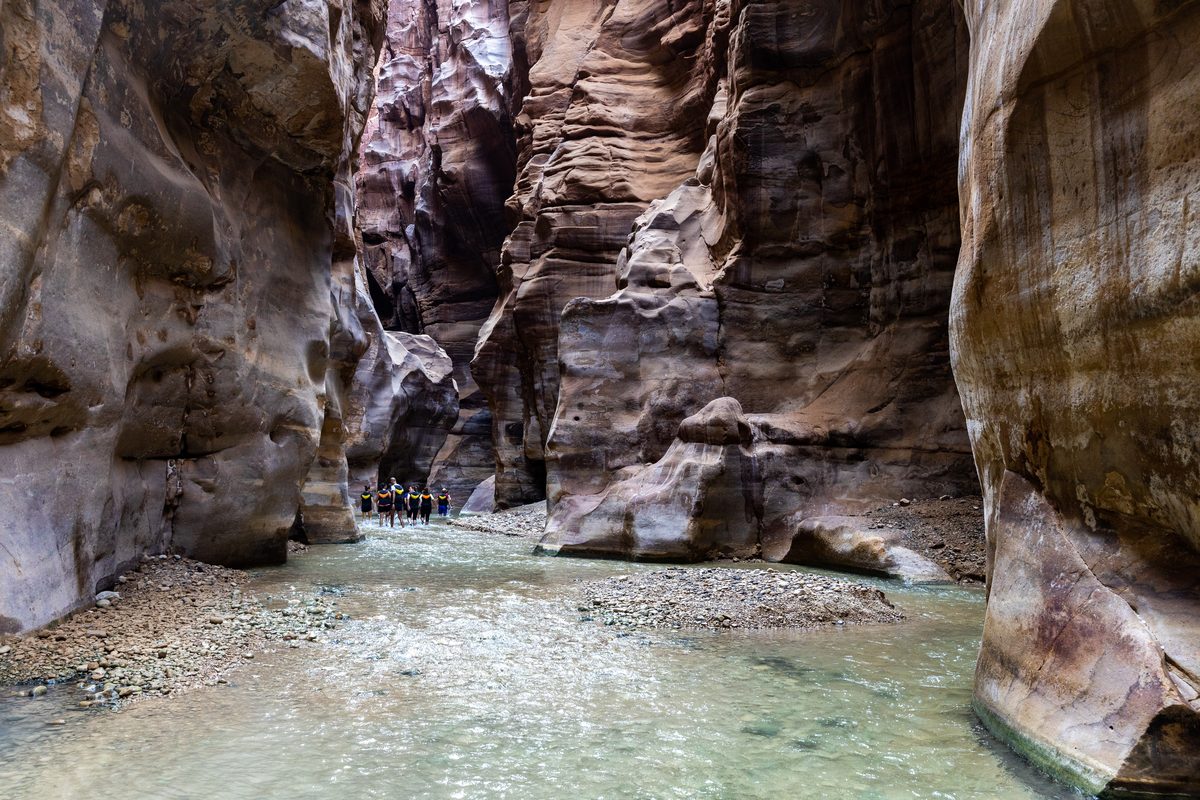
Wadi Mujib and Jordan's best canyons and waterfalls
Most people come to Jordan for the desert and the ancient stone, and then discover the country hides water. Down in the folds of its mountains, rivers have cut deep gorges through the sandstone, and inside them you find waterfalls, narrow passages barely wider than your shoulders, and pools cold enough to make you gasp on a summer afternoon. The most famous of them, Wadi Mujib, lets you do something you will not do anywhere else: put on a life jacket, step into a river, and walk upstream between walls that rise two hundred metres over your head. This is Jordan at its most surprising, and this guide covers where to go, when, and how to do it without getting into trouble.
Heads up: some links on this page are affiliate links. If you book through one we may earn a small commission at no extra cost to you — it keeps these guides free. It never changes what we recommend.
What a "wadi" actually is
You will see the word everywhere in Jordan, so it helps to know it. A wadi is simply the Arabic word for a valley or a riverbed — often one that is dry for much of the year and then fills with water after rain. Over thousands of years, seasonal rivers have carved Jordan's wadis down through soft sandstone, leaving behind curved walls streaked in red, cream and rust, narrow slot passages where the sky becomes a ribbon overhead, and quiet pools where the water pauses before dropping to the next level.
That geology is why these places are such good hiking and canyoning in the warmer months. The rock holds shade, the pools hold cool water, and the shape of the gorge turns a simple walk into something closer to an adventure — you climb, you wade, you swim, you scramble. A few of Jordan's wadis carry water year-round; most run wet in spring and dry to a trickle by late summer. The star of them all drains straight into the Dead Sea, and it is where nearly every visitor starts.
The Wadi Mujib Siq Trail
Wadi Mujib is a mountainous sandstone gorge that empties into the Dead Sea at roughly 410 metres (about 1,345 feet) below sea level, which makes the surrounding reserve the lowest-altitude nature reserve on Earth. It is managed by the Royal Society for the Conservation of Nature (the RSCN), the same organisation that looks after most of Jordan's protected wild places, and the reserve exists to protect a genuinely rare pocket of biodiversity as much as to entertain hikers.
The route everyone comes for is the Siq Trail. It is a wet, self-guided walk that starts near the Dead Sea shore and heads up into the mouth of the gorge, following the river against the current. You do not walk beside the water — you walk in it. Within minutes you are wading to your knees, then your waist, then swimming a short stretch where the pool is too deep to stand. The walls close in until they are only a few metres apart and hundreds of metres tall, and the light drops to a cool green glow. You scramble over water-polished boulders, haul yourself up short waterfalls using fixed ropes, and eventually reach a larger fall where the trail turns around. Then you float and wade back down, this time with the current carrying you along.
A few practical facts define the trail. It is ticketed and you buy entry at the reserve gate. A life jacket is provided and you wear it the whole way. And, crucially, it is open only in the warm, dry season — broadly April through October — because in winter the same gorge that makes the trail thrilling becomes a channel for flash floods. When the wet trails are closed, they are closed for a reason; do not try to talk your way in.
One thing to understand about the Siq Trail is that it is a genuine mini-adventure, not a stroll with a photo stop. You will be soaked head to toe, you will use your arms as much as your legs, and there are a couple of moments — a rope over a waterfall, a swim through a narrow slot — that ask for a little nerve. That is exactly why people love it. For most reasonably fit adults and older children who can swim, it is manageable and unforgettable.
Other canyons worth the drive
Mujib gets the crowds, but it is one of several. If you have the appetite and the right guide, three more canyons reward the effort.
- Wadi al-Hasa. Around 40 km long and set in the Great Rift Valley, al-Hasa is the wild one — a long day of walking through canyons, past colourful rock and warm pools fed by springs. It is a bigger commitment than Mujib and almost always done with a guide, because the route is remote and reading the weather matters. In return you get scenery, solitude and a real sense of expedition.
- Wadi Hidan. Not far from Madaba, Hidan carries plenty of natural water and supports a surprising amount of wildlife. It is a favourite for swimming and for jumping through the canyon from pool to pool — a playful, watery route rather than a technical one, though you still want someone who knows it leading the way.
- Wadi Hmaira (also spelled Hemara). About an hour's drive from Amman, Hmaira is home to the highest waterfall in Jordan, framed by red cliffs that glow at the right time of day. It is the easiest of the three to reach on a short trip, which makes it a good option if your time near the capital is limited.
Between them, these four wadis cover the full range: Mujib for the classic self-guided thrill, Hidan for a swim-and-jump day, Hmaira for a big waterfall close to the city, and al-Hasa for the serious hiker who wants a full day in the backcountry.
When to go and staying safe
The single most important thing to understand about Jordan's canyons is the danger, and it is not the one people expect. It is not the height of the walls or the cold of the water — it is flash floods. Rain falling in the mountains many kilometres away, out of a blue sky above you, can gather into a wall of water and race down a narrow gorge with almost no warning. A wadi that is safe in the morning can be deadly by afternoon. This is why the wet trails run only in season, and why you should treat the closed season as a hard rule, not a suggestion.
A few habits keep you on the right side of that risk:
- Only go in season. For the wet trails at Mujib, that means roughly April to October. Outside that window they are closed, and for good reason.
- Use RSCN routes or a licensed guide. The Siq Trail is set up to be done safely on your own with the reserve's life jacket. For the dry canyoning routes and the longer wadis such as al-Hasa, go with a licensed guide who knows the terrain and reads the weather.
- Wear grippy water shoes. The rock is polished smooth and constantly wet. Closed-toe shoes with real grip prevent most slips; flip-flops cause them.
- Never attempt a wet canyon alone. Go with others, tell someone your plan, and if the sky over the mountains looks wrong, turn back.
Follow those and you remove almost all of the real danger, leaving only the good kind of adrenaline. The point is not to scare you off — thousands of people do these trails happily every season — it is to make sure you go on the right day, in the right place, with the right footwear.
How to book and what to bring
For Wadi Mujib itself, the process is refreshingly simple. You buy a ticket at the reserve entrance on the Dead Sea road, and the Siq Trail is self-guided from there, so you do not strictly need to book a tour. Many visitors do pair it with a Dead Sea float or a day tour from Amman, since the two sit close together — see our Dead Sea day trip guide for how the region fits together. Because opening dates shift with the weather each year, check that the wet trails are running before you drive out. For the longer canyons and any dry canyoning, arrange a licensed guide in advance rather than turning up hopeful.
What to bring is mostly about accepting that you will get wet:
- Quick-drying clothes you do not mind soaking — shorts or leggings and a light top, not cotton that stays heavy and cold.
- Grippy, closed-toe water shoes. This is the single most useful thing you can wear.
- A waterproof bag or case for your phone, plus a strap if you want photos. Almost everything you carry into the Siq will get soaked.
- A strap for glasses, sunscreen for the exposed sections, and drinking water for before and after.
- Leave anything that must stay dry — wallet, passport, spare clothes — in the car.
Time your visit for late spring or early autumn if you can. High summer is doable and the cool water is a relief, but the shoulder seasons give you comfortable air temperatures on the exposed sections and thinner crowds in the gorge. If you are still shaping your trip, our best time to visit Jordan guide lays out the year month by month.
Frequently asked questions
What is the Wadi Mujib Siq Trail?
The Siq Trail is a wet, self-guided route that follows a river up the Mujib gorge between towering sandstone walls. You wade, swim and scramble upstream against the current to a waterfall, then turn around and come back the same way. A life jacket is provided, the trail is ticketed, and it opens only in the warm, dry season because of flash-flood risk.
Is Wadi Mujib open year-round?
No. The wet trails, including the Siq Trail, run only in the warm, dry season — roughly April to October — and close over winter because rain higher in the mountains can send a flash flood down the gorge with no warning. Exact opening and closing dates shift each year with the weather, so check with the reserve before you travel.
Do you need a guide for Jordan's canyons?
It depends on the route. The Wadi Mujib Siq Trail is self-guided — you follow the river without a guide, wearing the life jacket the reserve provides. The longer, wilder canyons such as Wadi al-Hasa and the dry canyoning routes need a licensed guide, because they involve route-finding, abseiling and real flash-flood judgement. If in doubt, book a guide.
How hard is the Mujib Siq Trail?
It is moderately demanding rather than technical. You spend one to three hours wading and swimming against a current, scrambling over slick boulders and climbing short waterfalls with the help of fixed ropes. You do not need climbing experience, but you should be a confident swimmer, reasonably fit, and comfortable in moving water.
What should I wear and bring?
Wear quick-drying clothes you do not mind soaking and grippy water shoes with a closed toe — never flip-flops. Bring a waterproof bag or case for your phone, a strap for your glasses, sunscreen and drinking water. Leave anything that must stay dry in the car; almost everything you carry into the Siq will get wet.