
Jordanian food: what to eat, and where to find the good stuff
You can see Petra and float in the Dead Sea and still leave Jordan not really knowing it — because the country reveals itself at the table. Jordanian food is generous, unhurried and built for sharing: a shared platter you eat with your right hand, a table crowded with small dishes, a stranger insisting you take the last piece of bread. It leans on lamb, wheat, yoghurt, olive oil and warm spices rather than chilli heat, and much of the everyday menu happens to be vegetarian and cheap. Come hungry, say yes to what is offered, and this is what to order.
Heads up: some links on this page are affiliate links. If you book through one we may earn a small commission at no extra cost to you — it keeps these guides free. It never changes what we recommend.
Mansaf: the national dish
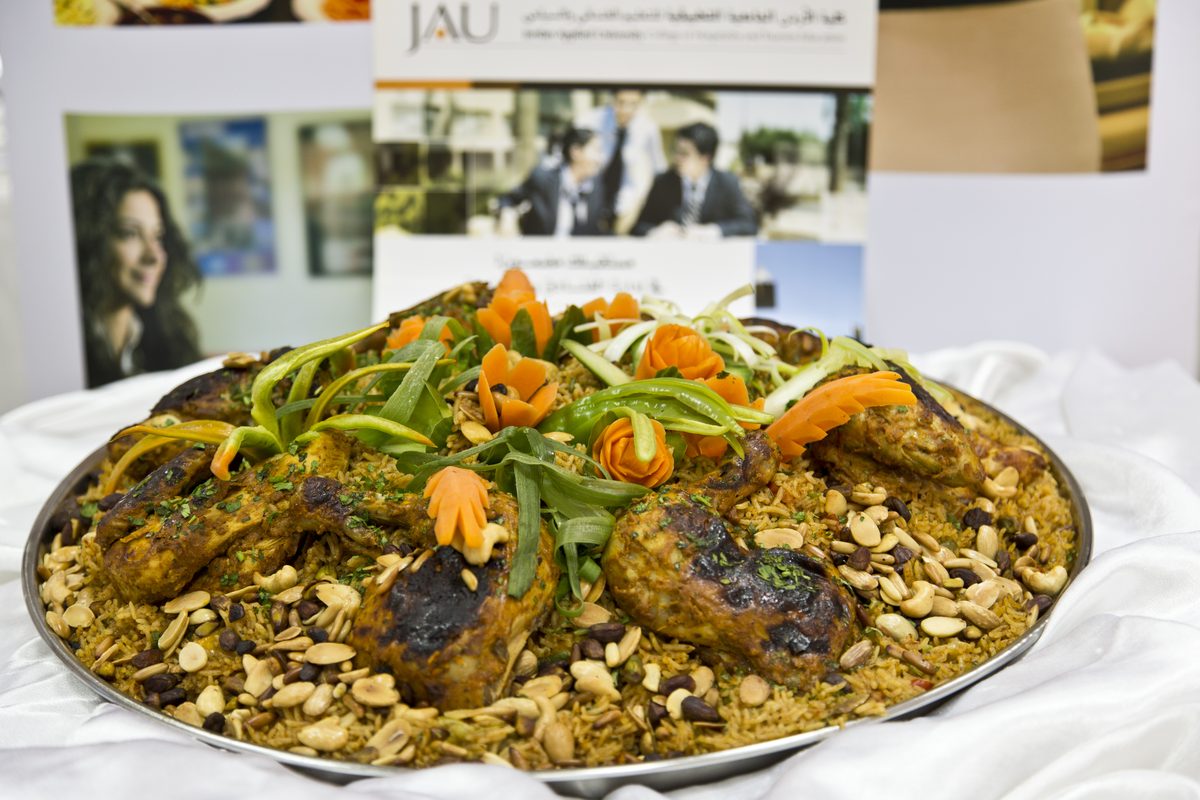
If you eat one Jordanian meal properly, make it mansaf. Lamb is slow-cooked until it falls off the bone in a sauce of jameed — hard, fermented dried yoghurt that Bedouin families roll into stone-like balls and keep for months, then dissolve back into a tangy, savoury broth. It is spooned over a bed of rice and shrak, the paper-thin flatbread that soaks up the sauce, and finished with fried almonds and pine nuts. The taste is unlike anything else in the region: sour, deep and comforting all at once.
Mansaf comes from the Bedouin tradition of the eastern deserts, where a whole animal cooked for guests was the highest expression of welcome, and that meaning has never left it. This is the dish of weddings, funerals, Fridays and feast days — the food you serve when you want to honour someone. Eating it is a small ceremony in itself: the platter is shared, and the polite way is to eat with your right hand, pressing the rice and meat into neat bites. If you are handed a spoon, that is fine too, but reaching in with your hand is how you say you belong at the table.
A word of advice: mansaf is best where it is cooked with care, not ladled out under heat lamps. If a Jordanian family invites you to share one, drop your other plans and go. Short of that, ask a local where the good mansaf is — everyone has an opinion, and the argument alone is worth the price of lunch.
Mezze and street food
Most of what you will eat day to day in Jordan is not the grand platter but the small stuff: mezze, the spread of little dishes that opens a meal, and the street food that keeps a city fed between meals. It is cheap, fast, largely vegetarian and, at its best, some of the finest casual eating anywhere.
Start with the trio you will meet every morning. Falafel — crisp, herb-green fritters of ground chickpeas, fried to order and eaten hot from the pan. Hummus — smooth, lemony and topped with a generous pool of olive oil, scooped up with warm bread, never a spoon. Foul — stewed fava beans mashed with garlic, lemon and oil, the classic worker's breakfast. Add labneh, strained yoghurt thick enough to spread, drizzled with oil and dusted with dried mint or za'atar.
Then the salads and the little dishes: tabbouleh, a bright tangle of parsley, mint, bulgur and tomato; fattoush, a crunchy salad sharpened with sumac and shards of toasted bread; mutabbal, smoky aubergine whipped with tahini; makdous, baby aubergines cured in oil with walnut and garlic; and warak enab, vine leaves rolled around rice and herbs. Order four or five of these, a stack of bread and some tea, and you have a feast for the price of a sandwich back home.
Street food deserves its own mention. Look for shawarma stacked and shaved to order, ka'ak sesame bread rings sold from carts, and hole-in-the-wall falafel counters where the queue tells you everything you need to know. The rule in Jordan is simple: if locals are lining up, join them.
Knafeh and sweets
Jordan's great sweet weakness is knafeh, and you should not leave without eating it hot. The classic Nabulsi-style version layers soft, mild white cheese under a crown of orange-tinted semolina pastry, bakes it until the cheese turns molten and the top goes crisp, then drenches the whole thing in rose-scented sugar syrup and showers it with crushed pistachio. It is served by weight from a tray the size of a car bonnet, cut into a paper dish, and eaten standing up — the pull of the melted cheese is half the pleasure, and it does not survive going cold.
Beyond knafeh, the sweet counter runs deep. Baklava — layered filo, nuts and syrup in a dozen shapes — is sold by the assorted kilo and makes a good gift to carry home. During Ramadan the star is qatayef, little stuffed pancakes folded around sweet cheese or walnuts and either fried crisp or served soft, that appear on every street for the month and then vanish. Wash any of it down with unsweetened coffee to cut the sugar.
Bread and bakeries
Bread in Jordan is not a side; it is the cutlery, the plate and the glue of the whole meal. The everyday loaf is khubz, the pocket flatbread you tear to scoop hummus and foul. But the one to seek out is shrak (also called markook) — an enormous, tissue-thin bread cooked in seconds on a domed metal griddle called a saj, folded into quarters and used to wrap everything from cheese to grilled meat. Watching a baker swing the dough into a translucent circle and slap it onto the dome is a small piece of theatre.
Then there is taboon bread, thicker and dimpled from being baked on hot stones, and the bakery snacks that fuel the morning: ka'ak, the sesame-crusted bread rings eaten with a twist of za'atar and salt, and manaqish — flatbread baked with a topping, most famously za'atar (wild thyme, sumac and sesame bound in olive oil) but also cheese or spiced minced meat. A hot za'atar manqoushe folded in half and eaten on the walk to somewhere is one of the great cheap breakfasts of the region.
What to drink
Tea (shai). Sweet black tea, often with fresh mint or sage, is the drink of Jordan. It is poured constantly — in shops, in homes, at the end of a haggle in the souk — and refusing the first glass is harder than accepting it. It costs almost nothing and it is the fastest way into a conversation.
Arabic coffee (qahwa). Not the dark espresso you might expect, but a pale, lightly roasted coffee heavily perfumed with cardamom, served in small handleless cups. It is the centrepiece of Bedouin hospitality: your host will keep topping up the cup until you gently tilt it side to side to signal you have had enough. Sip it slowly and take a date with it.
Everything else. In winter, warm up with sahlab, a thick, milky drink dusted with cinnamon, pistachio and coconut. In summer, cool down at a juice stand with fresh pomegranate, orange or lemon-and-mint, or try tart, dark tamarind juice, a Ramadan favourite. Stick to bottled water rather than the tap, and remember that Jordan is a light-drinking country — alcohol is available in hotels, some restaurants and licensed shops, but it is not part of the everyday table.
Where and how to eat
Head downtown. The best cheap eating in the country is in the old hearts of the cities — above all downtown Amman (al-Balad), where legendary falafel and hummus houses have been feeding the city for generations. These are not fancy places; they are bright, busy, cash-only counters where you point, sit and eat. See our Amman city guide for how to build a day around them.
Eat where the queue is. The single most reliable rule in Jordan is to follow the crowd. A stall with locals three-deep at breakfast is telling you something no review can. Be willing to eat standing up, to share a table, and to accept the small plate of something extra that arrives unasked — hospitality here is real, not performance.
Book a food walk. If you want the stories behind the dishes and an introduction to spots you would walk straight past, a guided food tour of downtown Amman is money well spent, especially early in a trip when it teaches you what to order for the rest of it. And when someone invites you home to share mansaf, say yes — that meal will outlast every monument on your itinerary.
Frequently asked questions
What is Jordan's national dish?
Mansaf — lamb slow-cooked in a tangy sauce of jameed (fermented dried yoghurt), served over rice and shrak flatbread and topped with almonds and pine nuts. It is far more than a meal: it is the dish of hospitality, brought out for weddings, holidays and honoured guests, and traditionally eaten by hand from one shared platter. Try it at least once, ideally somewhere it is made properly rather than at a tourist buffet.
Is Jordanian food spicy?
Not in the chilli-heat sense. Jordanian cooking is aromatic rather than fiery — warm with cumin, cinnamon, allspice, sumac and cardamom, and often finished with lemon, garlic and olive oil. Chilli sauce (shatta) is usually offered on the side so you can add heat yourself. If you dislike very hot food, you will be comfortable here; if you love it, ask for shatta.
What is a typical Jordanian breakfast?
A savoury spread eaten slowly: hot falafel, a plate of hummus pooled with olive oil, foul (stewed fava beans), creamy labneh, eggs, olives, tomatoes and cucumber, and plenty of fresh bread — all washed down with sweet tea. On Fridays and holidays many families add hot knafeh. It is filling, cheap and mostly vegetarian, and it easily carries you through to a late lunch.
Is Jordan good for vegetarians?
Very. A huge share of the everyday table is naturally meat-free: hummus, foul, falafel, mutabbal, labneh, tabbouleh, fattoush, makdous, warak enab and manaqish are all vegetarian, and often vegan. You can eat brilliantly for days without touching meat. Do ask whether stuffed vine leaves or pastries contain meat, as some versions do, but a mezze table will keep any vegetarian very happy.
What should I drink in Jordan?
Start with sweet mint tea, poured all day and offered everywhere as a sign of welcome. Then try Arabic coffee (qahwa) — pale, cardamom-scented and served in tiny cups, a fixture of Bedouin hospitality. In winter warm up with sahlab, and in summer cool down with fresh pomegranate or citrus juice, or a tart tamarind drink. Tap water is best avoided; bottled water is cheap and everywhere.